Insurance renewals are one of the most operationally sensitive processes inside an insurance brokerage. Every insurance renewal directly impacts client retention, regulatory compliance, revenue, and the overall customer experience.
Managing insurance renewals manually becomes increasingly difficult as a brokerage grows. Missed follow-ups, inconsistent communication, delayed responses, and human error can all lead to lost policies, lower retention rates, and increased Errors & Omissions (E&O) exposure.
Many insurance brokerages want to automate their insurance renewal process but worry that automation could reduce oversight or introduce compliance risks.
That concern is understandable, but it often comes from using the wrong technology.
When insurance renewals are automated through a Broker Management System (BMS) or Agency Management System (AMS), automation doesn’t replace broker expertise. Instead, it ensures every renewal follows a consistent, auditable, and compliant process.
In this guide, you’ll learn how insurance brokerages automate insurance renewals safely while improving efficiency, client retention, and operational control. Get a Complete Guide to Renewal Automation.
![[FREE GUIDE] Overcome objections. Win more clients. Unlock smarter strategies to convert leads and grow your insurance brokerage and agency - automatically.](https://no-cache.hubspot.com/cta/default/46516274/interactive-196778514614.png "Proven Ways to Automate Insurance Renewals Without Increasing Risk 1")
What Are Insurance Renewals?
Insurance renewals are the process of reviewing, updating, and extending an existing insurance policy before it expires. For insurance brokerages, the renewal process includes reviewing policy information, communicating with clients, gathering updated documentation, discussing coverage changes, and ensuring policies remain active without interruption.
Because insurance renewals occur throughout the year, they represent one of the most important opportunities to retain existing clients, increase lifetime customer value, and identify cross-sell opportunities.
Why Renewals Feel Too Risky to Automate
Most broker concerns fall into three categories.
1. Compliance and Documentation
Renewal communications are regulated, reviewable, and often scrutinized after the fact. Anything automated must be provable.
2. Data Accuracy
Sending the wrong message to the wrong client – even once – can create real exposure.
3. Loss of Visibility
Manual processes are inefficient, but teams feel safer because “someone knows what was sent.”
These concerns are amplified by prior exposure to generic marketing automation tools, which were never designed for regulated insurance workflows.
The Real Risk in Insurance Renewals Isn’t Automation
Most problems with insurance renewals don’t occur because brokerages automate their renewal process. They happen because renewal communications are managed outside the Broker Management System.
Many brokerages still rely on:
- spreadsheets
- generic CRM platforms
- marketing software
- manual email lists
When insurance renewals are managed across multiple disconnected systems:
- client information becomes inconsistent
- communications aren’t properly recorded
- audit trails become incomplete
- compliance becomes more difficult
The safest insurance renewal process always starts with a single source of truth. According to operational research cited by Deloitte, manual handoffs and disconnected systems are consistently among the highest contributors to operational risk in regulated industries.
How Insurance Brokerages Automate Insurance Renewals Safely
Brokerages that scale renewals without increasing risk follow a different model.
1. The Broker Management System Remains the Source of Truth
Safe renewal automation starts with a simple rule:
If it’s not in the broker management system, it does not drive communication.
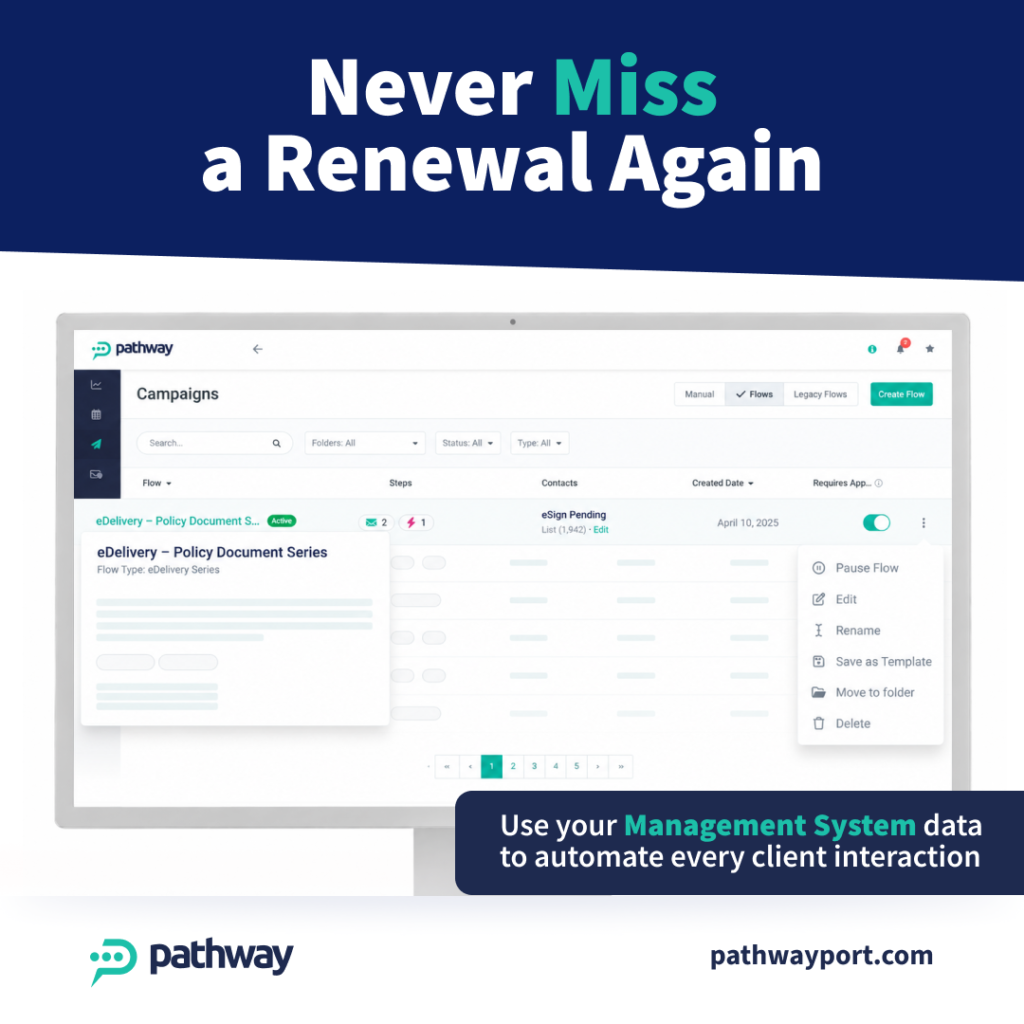
Renewal workflows should be triggered exclusively by live policy and account data from systems such as Applied Epic or Acturis:
- renewal dates
- policy status
- assigned handler or producer
Automation follows the BMS/AMS. It never overrides it.
This architectural principle is critical for auditability and regulatory defensibility.
2. Automation Supports Execution – Not Judgment
Insurance renewal automation works best when it standardizes execution, not decision-making.
Effective automation:
- enforces consistent outreach timing
- ensures required messages are sent
- reduces manual chasing and follow-ups
It does not replace:
- coverage review
- underwriting judgment
- compliance approval
In practice, this means:
- renewal reminders go out 60–90 days in advance
- exceptions are flagged internally
- humans retain control over decisions
This distinction aligns with findings from McKinsey & Company, which has repeatedly noted that automation delivers the highest risk reduction when it augments human judgment rather than replacing it.
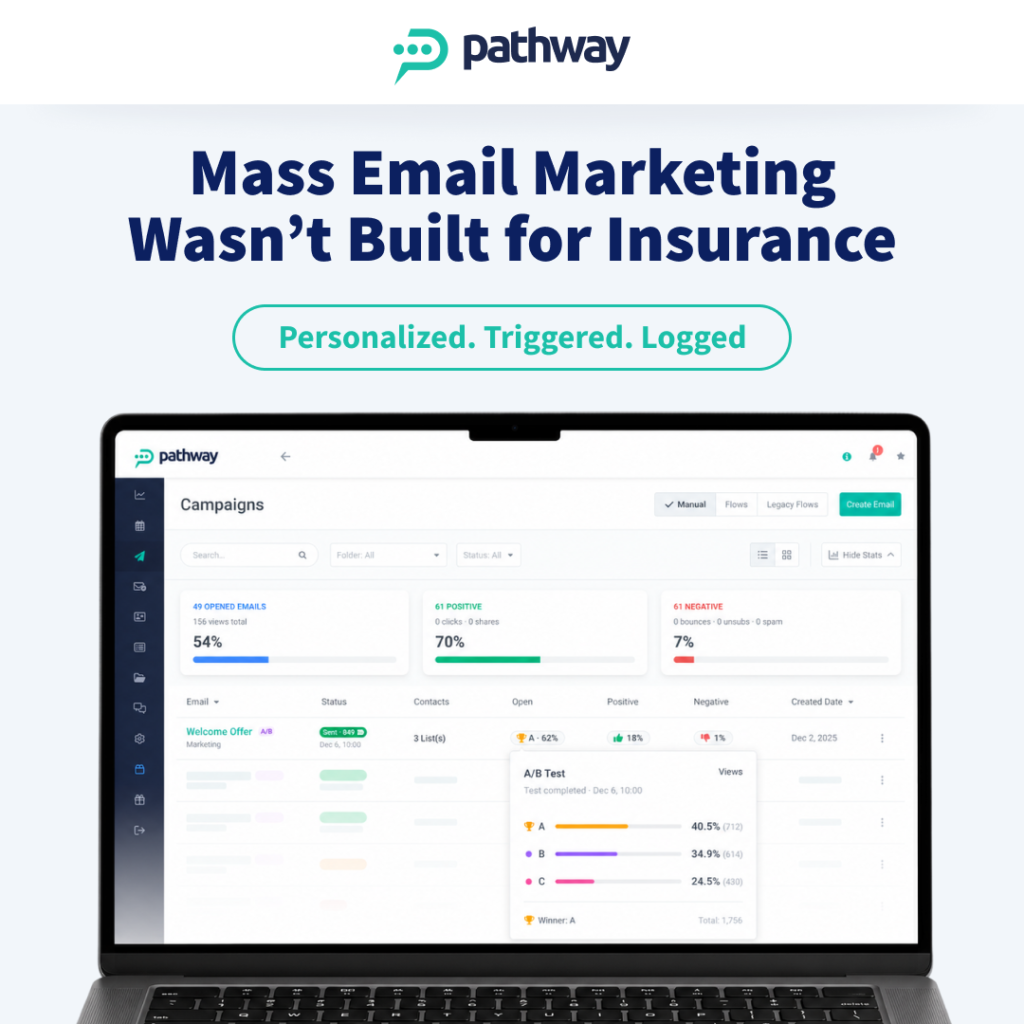
3. Every Client Communication is Logged Automatically
One of the biggest advantages of insurance renewal automation is complete visibility.
Every renewal communication should automatically record:
- email delivery
- timestamps
- sender information
- client responses
- internal activities
This produces a more reliable audit trail than manual sending, where logging depends on individual discipline.
Research referenced by Forrester consistently shows that automated, system-logged workflows outperform manual processes in both consistency and compliance traceability.
4. Personalized Insurance Renewals Improve Client Experience
Modern insurance renewals don’t need to feel automated.
With the right platform, renewal communications can include:
- client names
- policy information
- assigned broker details
- personalized recommendations
- renewal-specific messaging
Clients experience professional, timely communication while brokers eliminate repetitive manual work. Thing feels automated. It simply feels timely, consistent, and professional. According to Bloomberg analysis of insurance service trends, client dissatisfaction is most often tied to missed or unclear communication, not automation itself.
Common Challenges with Manual Insurance Renewals
Many brokerages still manage insurance renewals manually, leading to:
- missed renewal deadlines
- inconsistent client communication
- duplicated work
- incomplete documentation
- reduced client retention
- unnecessary administrative costs
As the number of policies grows, these challenges become increasingly difficult to manage without automation.
Benefits of Automating Insurance Renewals
Insurance brokerages that automate insurance renewals typically experience:
- Higher client retention
- Earlier renewal engagement
- Better compliance
- Fewer missed follow-ups
- More consistent client communication
- Reduced administrative workload
- Improved staff productivity
- Stronger customer relationships
Why Automated Insurance Renewals Reduce Risk
Many brokers assume manual insurance renewals are safer because people remain directly involved.
In reality, manual processes often introduce greater risk through inconsistent execution, forgotten follow-ups, incomplete documentation, and reliance on individual memory.
Insurance renewal automation reduces these risks by creating standardized workflows, documenting every communication automatically, and ensuring every client receives consistent service throughout the renewal process.
What This Means for Insurance Brokerages
Renewal automation is not about doing more.
It’s about doing the same critical work:
- more consistently
- more visibly
- with less operational strain
When automation is:
- built around the broker management system
- designed to support existing processes
- fully logged and auditable
…it becomes a risk-reduction mechanism, not a liability.
Ready to Improve Your Insurance Renewal Process?
See how PathwayPort helps insurance brokerages automate insurance renewals while maintaining complete visibility, compliance, and control.
Book a personalized demo to discover how automated insurance renewals can reduce administrative work, improve retention, and help your brokerage scale more efficiently.
SIGN UP FOR THE NEWSLETTER. 👇
FAQs
1. What are insurance renewals?
Insurance renewals are the process of reviewing and extending an existing insurance policy before it expires. During the insurance renewal process, brokers verify policy details, assess coverage needs, communicate with clients, and ensure policies remain active without interruption. Effective insurance renewals help improve client retention, maintain compliance, and create opportunities for cross-selling additional coverage.
2. How can insurance brokerages automate insurance renewals?
Insurance brokerages can automate insurance renewals by connecting their Broker Management System (BMS) or Agency Management System (AMS) with insurance automation software. This allows renewal reminders, follow-up emails, digital forms, document requests, and internal notifications to be triggered automatically while keeping every communication logged for compliance and audit purposes.
3. Does automating insurance renewals increase compliance risk?
No. When insurance renewals are automated using a platform that integrates directly with your BMS or AMS, automation can actually reduce compliance risk. Every renewal communication is recorded automatically, creating a complete audit trail, improving consistency, and reducing the chance of missed follow-ups or manual errors.
4. What are the benefits of automating insurance renewals?
Automating insurance renewals helps brokerages reduce administrative work, improve client retention, increase communication consistency, and streamline renewal workflows. It also allows brokers to send timely renewal reminders, personalize client communications, reduce manual errors, and spend more time providing expert advice instead of managing repetitive administrative tasks.
Recent Posts
 Policy Cancellation:…October 13, 2026
 Email Marketing Insi…August 28, 2026
 How Do UK Insurance …August 6, 2026
Collapsible