
Renewals are one of the most operationally sensitive processes inside an insurance brokerage.
They sit at the intersection of:
- regulatory obligations
- client expectations
- revenue retention
- E&O exposure
For many insurance brokerages, renewals are also the least scalable part of the business. Get a Complete Guide to Renewal Automation.
It’s common to hear operations leaders say: “We’d love to automate renewals, but it feels risky.”
That concern is reasonable. But it’s also incomplete.
Renewal automation does not increase risk by default.
Automation increases risk only when it’s designed outside the broker’s operating model.
This article explains how insurance brokerages automate renewal communications safely, without weakening compliance, auditability, or control.
Why Renewals Feel Too Risky to Automate
Most broker concerns fall into three categories.
1. Compliance and Documentation
Renewal communications are regulated, reviewable, and often scrutinized after the fact. Anything automated must be provable.
2. Data Accuracy
Sending the wrong message to the wrong client – even once – can create real exposure.
3. Loss of Visibility
Manual processes are inefficient, but teams feel safer because “someone knows what was sent.”
These concerns are amplified by prior exposure to generic marketing automation tools, which were never designed for regulated insurance workflows.
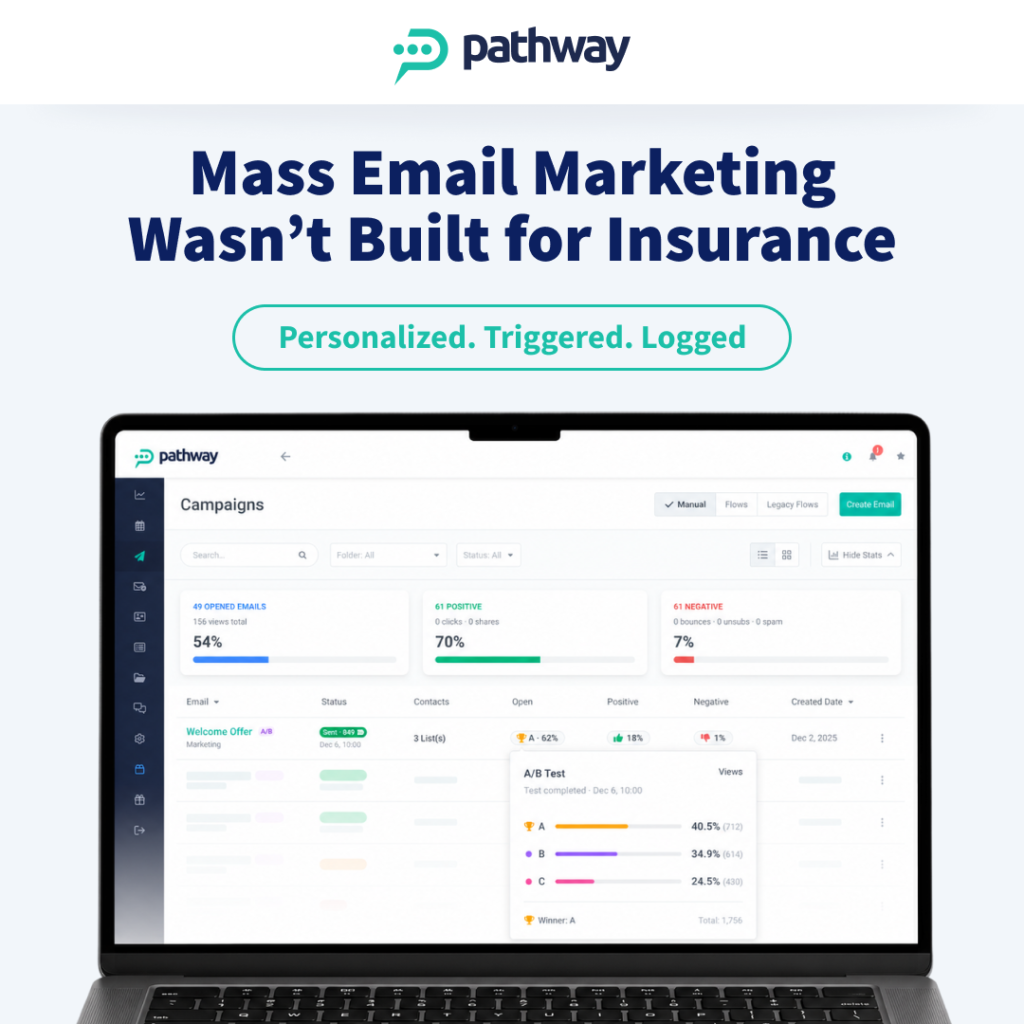
The Real Failure Point: Automation Built Outside the System of Record
Most renewal automation failures don’t come from automation itself. They come from where the automation lives.
In many brokerages, renewal communications are automated using:
- CRMs
- general-purpose marketing platforms
- spreadsheets and ad-hoc lists
In these setups:
- the system of record becomes ambiguous
- communications aren’t logged back to the broker system
- audit trails depend on manual reconciliation
This is where risk actually increases.
According to operational research cited by Deloitte, manual handoffs and disconnected systems are consistently among the highest contributors to operational risk in regulated industries.
How To Automate Renewals Safely
Brokerages that scale renewals without increasing risk follow a different model.
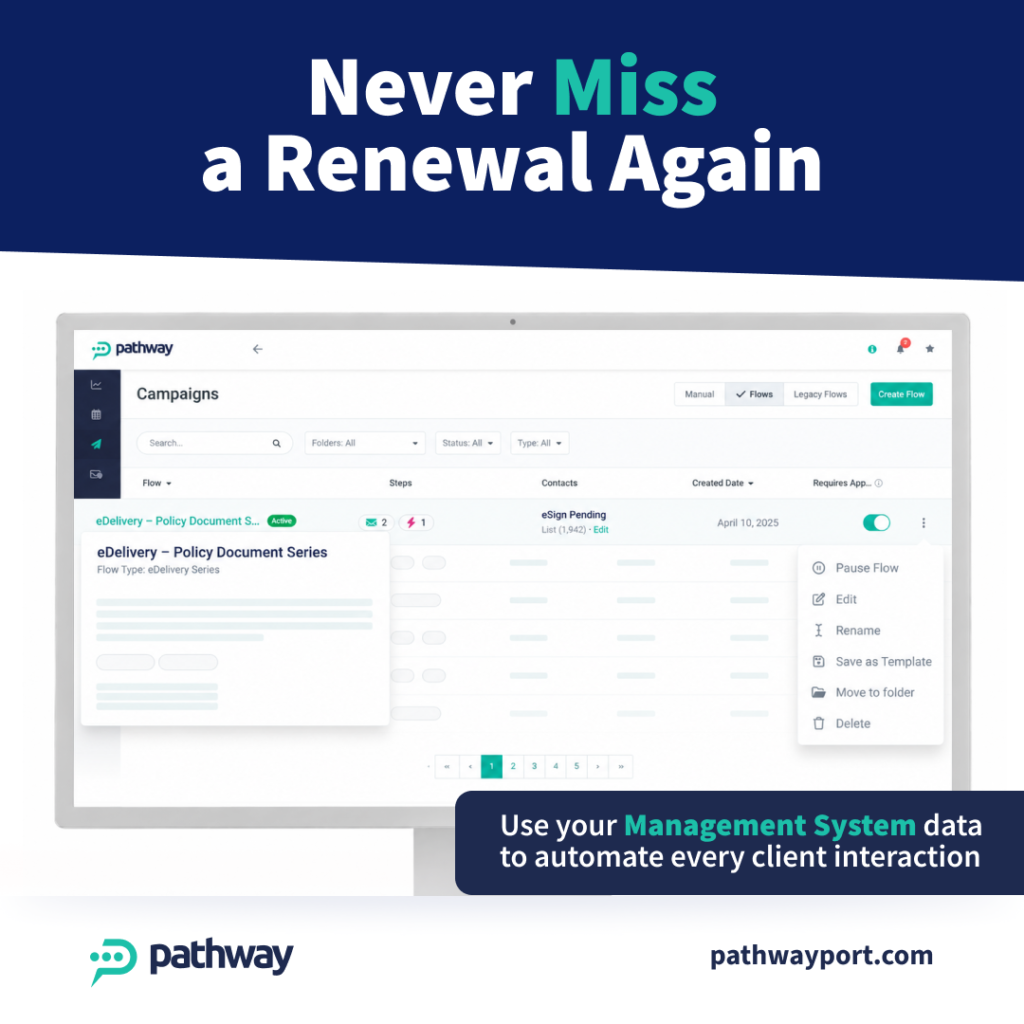
1. The Broker Management System Remains the Source of Truth
Safe renewal automation starts with a simple rule:
If it’s not in the broker management system, it does not drive communication.
Renewal workflows should be triggered exclusively by live policy and account data from systems such as Applied Epic or Acturis:
- renewal dates
- policy status
- assigned handler or producer
Automation follows the BMS/AMS. It never overrides it.
This architectural principle is critical for auditability and regulatory defensibility.
2. Automation Supports Execution – Not Judgment
Renewal automation works best when it standardizes execution, not decision-making.
Effective automation:
- enforces consistent outreach timing
- ensures required messages are sent
- reduces manual chasing and follow-ups
It does not replace:
- coverage review
- underwriting judgment
- compliance approval
In practice, this means:
- renewal reminders go out 60–90 days in advance
- exceptions are flagged internally
- humans retain control over decisions
This distinction aligns with findings from McKinsey & Company, which has repeatedly noted that automation delivers the highest risk reduction when it augments human judgment rather than replacing it.
3. Every Client Communication is Logged Automatically
One of the most overlooked advantages of renewal automation is documentation.
When done correctly:
- every email sent is logged
- timestamps and sender identity are preserved
- activities or tasks are created automatically
This produces a more reliable audit trail than manual sending, where logging depends on individual discipline.
Research referenced by Forrester consistently shows that automated, system-logged workflows outperform manual processes in both consistency and compliance traceability.
4. Communications Remain Personal Not Generic
“Automated” does not mean “impersonal.”
Modern renewal automation allows:
- messages sent from the assigned handler or producer
- personalization using policy and client data
- replies routed directly back to the right person
From the client’s perspective, nothing feels automated. It simply feels timely, consistent, and professional.
This matters. According to Bloomberg analysis of insurance service trends, client dissatisfaction is most often tied to missed or unclear communication, not automation itself.
Why Manual Renewal Processes Often Create More Risk
Ironically, manual renewal workflows frequently introduce the very risks brokers are trying to avoid:
- inconsistent timing
- missed follow-ups
- undocumented communications
- reliance on individual memory
As books of business grow, these gaps widen.
Controlled automation reduces these failure points by:
- enforcing consistency
- creating documentation by default
- reducing dependence on individuals
That’s why many growing insurance brokerages discover that automation doesn’t weaken compliance – it strengthens it.
What This Means for Insurance Brokerages
Renewal automation is not about doing more.
It’s about doing the same critical work:
- more consistently
- more visibly
- with less operational strain
When automation is:
- built around the broker management system
- designed to support existing processes
- fully logged and auditable
…it becomes a risk-reduction mechanism, not a liability.
Key principle to remember
With insurance renewals, automation only reduces risk when every step is visible and accountable. PathwayPort helps brokers and agencies track what was sent, when it was sent, and who was responsible — so renewal automation becomes safer, more consistent, and easier to manage.
If renewal automation cannot show those details, it can increase risk. When it can, it usually reduces it. That visibility is what separates effective insurance automation from risky automation.

Recent Posts
 Proven Ways to Autom…June 25, 2026
 25 Must-Attend Insur…June 23, 2026
 The Ultimate Guide t…June 18, 2026
Recent Comments
on Top10 Best Triggered Email Marketing Campaigns for Insurance BrokersThanks for sharing, it's…
on Top10 Best Triggered Email Marketing Campaigns for Insurance BrokersI would like to point out…
on Marketing Automation for Insurance: 6 Best PracticesIts like you read my mind…
Leave a Comment