
Many insurance agencies focus their communication around policy renewals. The problem is that clients only hear from their broker once or twice a year.
The most successful insurance brokerages and agencies take a different approach.
Instead of sending emails only when a policy is due, they use strategic insurance emails throughout the customer lifecycle. These emails educate clients, reduce coverage gaps, improve retention, and create opportunities to strengthen relationships long before renewal season arrives.
If you’re wondering which insurance emails generate the greatest long-term value, start with these five.
1. The “You’re Covered” Welcome Email
Client Need: Confidence and clarity after purchasing a policy.
Most policyholders don’t read policy documents immediately after purchase. They want reassurance that they’re protected and know who to contact when questions arise.
A welcome insurance email should explain:
- What happens next
- How to access policy documents
- How to submit a claim
- Who to contact for support
- Additional services your agency provides
Why it matters:
Clients who understand their coverage from day one are more likely to stay engaged and renew their policies.
2. The Renewal Planning Email
Client Need: Continuous coverage without surprises.
Many agencies wait until the final weeks before expiration to begin renewal conversations.
Instead, brokers should use automated insurance emails 30 to 45 days before renewal to:
- Remind clients of upcoming expiration dates
- Confirm current information
- Identify lifestyle or business changes
- Review coverage limits and deductibles
Why it matters:
Early renewal communication reduces policy lapses and creates opportunities to improve coverage rather than simply extending it.
3. The Risk Prevention Email
Client Need: Help avoiding losses before they happen.
The best insurance emails aren’t about insurance at all.
They help clients reduce risk.
Examples include:
- Winter driving preparation
- Hurricane readiness
- Home maintenance reminders
- Cybersecurity recommendations
- Commercial property loss prevention
Why it matters:
Clients remember brokers who help them avoid claims, not just process them.
4. The Life Changes Email
Client Need: Coverage that keeps up with changing circumstances.
Most coverage gaps happen after major life events.
Insurance brokers should regularly send emails encouraging clients to review coverage after:
- Purchasing a home
- Starting a business
- Getting married
- Having children
- Hiring employees
- Purchasing vehicles
Why it matters:
These emails protect clients from underinsurance while creating natural cross-sell opportunities.
5. The Annual Protection Review Email
Client Need: Confidence that their insurance strategy still fits their needs.
An annual protection review goes beyond a standard renewal notice.
The goal is to evaluate:
- Existing policies
- Coverage limits
- Emerging risks
- New insurance products
- Potential savings opportunities
Why it matters:
Clients who receive regular policy reviews are more likely to view their broker as a trusted advisor rather than a transaction processor.
What Makes Insurance Emails Effective?
Not every insurance email drives engagement.
The highest-performing insurance email campaigns typically share four characteristics:
Personalization
Reference policy types, coverage needs, and client circumstances whenever possible.
Automation
Automated insurance emails ensure timely communication without increasing staff workload.
Relevance
Every email should solve a problem, answer a question, or help clients make better decisions.
Clear Calls-to-Action
Effective CTAs include:
- Review My Coverage
- Schedule My Policy Review
- Renew My Policy
- Request a Quote
- Speak with My Broker
The Future of Insurance Emails
The Future of Insurance Emails
The future of insurance emails isn’t about sending more messages—it’s about sending smarter ones.
For years, insurance agencies relied on generic newsletters, broad renewal reminders, and one-size-fits-all campaigns. Today, advances in artificial intelligence, automation, and customer data are transforming insurance emails into highly personalized conversations that adapt to each client’s unique needs, risks, and life events.
Modern insurance email marketing is becoming:
Hyper-Personalized
Rather than sending the same message to every policyholder, agencies can now use policy data, coverage information, client behavior, life events, and local risk factors to deliver highly relevant communications.
For example, a homeowner approaching hurricane season may receive different insurance emails than a business owner facing cyber risks or a family preparing to add a teen driver to their policy.
The result is more relevant communication, higher engagement, and stronger client relationships.
Contextual and Customer-Driven
The next generation of insurance emails focuses on what clients need at a specific moment.
Instead of simply reminding clients that a policy is expiring, agencies can proactively reach out when:
- Coverage gaps are detected
- Life events may impact insurance needs
- New risks emerge in a client’s region
- Claims activity suggests additional protection may be beneficial
This customer-first approach helps agencies move from reactive service providers to trusted advisors.
Interactive and Action-Oriented
Insurance emails are evolving beyond static content.
Clients increasingly expect to complete actions directly from an email, including:
- Updating contact information
- Reviewing coverage details
- Scheduling policy reviews
- Uploading documents
- Requesting quotes
- Making payments
Reducing friction makes it easier for clients to engage with their agency and take action when needed.
AI-Augmented but Human-Led
Artificial intelligence is helping agencies automate communication, generate personalized content, identify coverage opportunities, and prioritize client outreach.
However, the most successful agencies use AI to enhance human relationships—not replace them.
AI can identify which clients need attention, suggest relevant messaging, and automate routine communications, while brokers continue to provide the expertise, advice, and trust clients expect.
Built Around Security and Compliance
As insurance communications become more personalized and data-driven, protecting client information becomes even more important.
Future insurance email strategies must balance personalization with strong security controls, compliance requirements, consent management, and fraud prevention measures.
Clients increasingly expect both convenience and confidence that their sensitive information is protected.
What This Means for Insurance Agencies
The future of insurance emails belongs to agencies that communicate proactively, personalize intelligently, and automate strategically.
Rather than waiting for renewals or claims, leading agencies are building automated communication journeys that deliver the right message, to the right client, at the right time.
As AI, automation, and customer expectations continue to evolve, insurance emails will become less about broadcasting information and more about creating meaningful, ongoing conversations that improve retention, strengthen trust, and help clients make better insurance decisions.
Recent Posts
 Email Marketing Insi…August 28, 2026
 How Do UK Insurance …August 6, 2026
 Insurance Email Temp…July 30, 2026
Collapsible
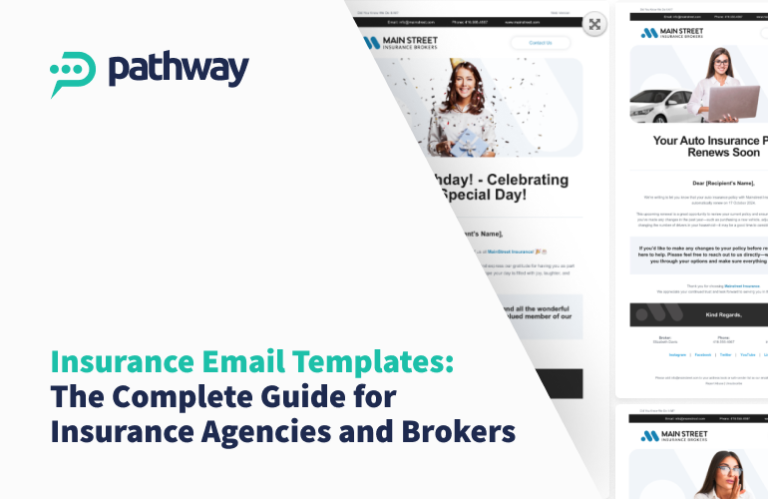
Leave a Comment
Comments:
Just want to say your article is as astounding. The clearness on your publish is simply
Comment by cialis online no prescription on February 9, 2022 at 17:54nice and i could assume you are an expert on this subject.
Fine with your permission let me to grasp your feed to keep
updated with forthcoming post. Thanks a million and please keep up the enjoyable
work.