Insurance client communication is no longer about sending more emails – it’s about sending the right message to the right policyholder at the right time.
Insurance agencies personalize client communication by using data from their Agency Management System (AMS) or Broker Management System (BMS) to send relevant, timely communications based on each client’s policies, lifecycle stage, renewal dates, claims activity, payment status, communication preferences, and insurance needs. Modern agencies combine this data with automation and AI to deliver personalized emails, SMS messages, policy reminders, claims updates, educational content, and coverage recommendations throughout the customer journey.
Why Personalization of Client Communication Matters in Insurance
Insurance is built on long-term relationships. Unlike many industries, clients interact with their insurance agency throughout the year – not only when purchasing a policy. Every interaction shape trust.
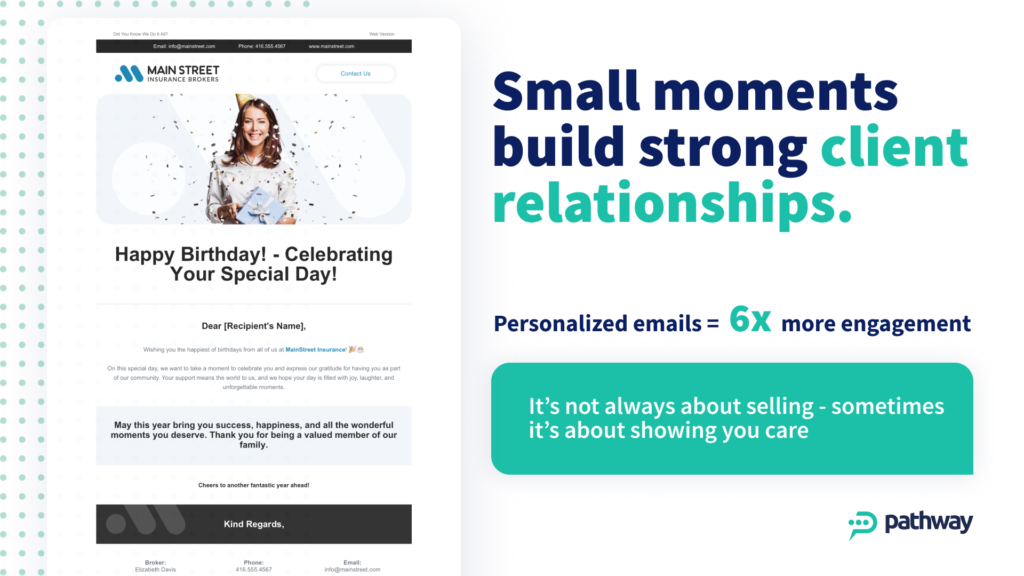
Clients expect their insurance agency to remember:
- their policies
- previous conversations
- renewal dates
- recent claims
- preferred communication channels
- changing insurance needs
According to PwC, 73% of consumers consider customer experience an important factor in purchasing decisions, while McKinsey reports that organizations leading in personalization generate 40% more revenue from personalization than average performers.
For insurance agencies, personalization isn’t simply a marketing tactic – it directly supports retention, customer satisfaction, and long-term growth.
How Insurance Agencies Personalize Client Communication
Successful insurance agencies personalize client communication across four connected levels.
Every communication answers four questions:
- Who should receive the message?
- When should it be sent?
- What should it say?
- How should it be delivered?
This framework allows insurance businesses to deliver communication that feels helpful rather than promotional.
1. WHO Receives the Communication
Insurance agencies personalize client communication by understanding every policyholder.
The first step is identifying exactly who should receive each communication. Rather than creating one large marketing list, modern brokerages build dynamic client segments using information stored inside their AMS or BMS.
Insurance-specific segmentation may include:
Policy Information
- Auto insurance
- Home insurance
- Commercial insurance
- Life insurance
- Cyber insurance
- Umbrella policies
- Multi-policy households
Client Lifecycle
- New prospects
- New policyholders
- Existing clients
- Clients approaching renewal
- Former clients
- Referral customers
Business Characteristics
- Industry
- Business size
- Number of employees
- Fleet vehicles
- Property portfolio
Risk & Coverage
- Claims history
- Coverage gaps
- High-value properties
- High-value commercial accounts
- Outstanding balances
- Policies nearing expiration
Client Engagement
- Opened previous emails
- Completed renewal forms
- Requested quotes
- Downloaded policy documents
- Submitted online reviews
- Responded to surveys
Rather than maintaining one marketing database, agencies create dynamic segments that update automatically as customer information changes.
2. WHEN Agencies Communicate
Timing is one of the biggest drivers of successful insurance client communication.
The most effective insurance teams don’t schedule communication around their marketing calendar. They schedule communication around insurance events. Every policy creates dozens of opportunities for proactive outreach.
Before a Policy Is Purchased
- Quote follow-ups
- Application reminders
- Missing information requests
- Educational content
During Onboarding
- Welcome emails
- Agent introductions
- Policy summaries
- Digital document delivery
- Client portal invitations
During the Policy Term
- Billing reminders
- Policy updates
- Seasonal risk advice
- Claims prevention tips
- Coverage education
Before Renewal
- Renewal reminders
- Digital questionnaires
- Coverage reviews
- Premium explanations
- Cross-sell opportunities
After a Claim
- Claims status updates
- Required documentation
- Satisfaction surveys
- Coverage recommendations
*Explore the Top 10 Insurance Workflows Every Agency Should Automate
The question successful agencies ask isn’t: “What campaign should we send this month?”
It’s: “What just happened inside our AMS or BMS that requires communication?”
That shift transforms marketing into personalized client service.
3. WHAT Agencies Communicate
Personalization means every message reflects the client’s insurance situation.
Sending communication at the right time isn’t enough. The content must also be relevant. Insurance agencies personalize communication by using policy information already stored in their management system.
Instead of saying: “Your policy renews next month.”
They communicate with context: “Your commercial property policy renews in 45 days. Since your business expanded this year, now is a good opportunity to review whether you’re building and contents coverage still reflects your current operations.”
Or:
“You currently insure two vehicles with our agency but don’t have homeowners’ insurance. Let’s review whether bundling your policies could improve both your protection and your premium.”
Or:
“We noticed you’ve recently completed your renewal questionnaire. Based on your responses, we’d like to review your liability limits before your renewal is finalized.”
This level of communication feels like professional advice rather than marketing.
4. HOW Agencies Deliver Personalized Client Communication
AI and automation make personalized communication scalable.
Maintaining personalized communication manually becomes increasingly difficult as an agency grows. Automation allows insurance teams to communicate consistently with thousands of policyholders while keeping every message relevant.
Common automated insurance communications include:
- Renewal reminders
- Billing reminders
- Policy document delivery
- Quote follow-ups
- Welcome journeys
- Claims communications
- Cross-sell campaigns
- Review requests
- NPS surveys
- Referral campaigns
Artificial intelligence adds another layer of personalization by helping agencies. PathwayPort’s AI bot helps agencies to:
- Generate personalized email content
- Improve calls-to-action and client engagement messaging
- Overcome writer’s block and generate new ideas instantly
- Translate, change the tone, set length
- Suggest the next best communication
- Prioritize broker follow-ups
The key difference is that these communications are powered by live insurance data, not static marketing lists.
Platforms that integrate directly with an AMS or BMS can trigger workflows whenever a policy changes, a renewal approaches, a claim is filed, or client information is updated. This allows brokerages to personalize communication using real-time insurance events instead of manually maintained contact lists. PathwayPort’s communication platform is built around this insurance-first approach, combining two-way AMS/BMS synchronization with automation and AI capabilities.
Insurance Personalization Throughout the Client Lifecycle
Leading agencies think in terms of client journeys rather than individual campaigns.
| Client Stage | Personalized Communication |
|---|---|
| Prospect | Quote follow-ups, educational resources |
| New Policyholder | Welcome emails, onboarding, policy documents, portal access |
| Active Client | Billing reminders, newsletters, seasonal risk advice, policy updates |
| Renewal | Renewal questionnaires, coverage reviews, premium explanations |
| Claims | Claims updates, document requests |
| Long-Term Client | Annual reviews, cross-sell opportunities, referrals, loyalty campaigns |
Each interaction builds upon the previous one, creating an ongoing relationship instead of isolated touchpoints.
Why AMS/BMS Integration Is the Foundation of Personalization
Many marketing platforms personalize client communication using basic contact information. Insurance agencies need much more.
To deliver truly personalized client communication, agencies rely on live operational data from their Agency Management System (AMS) or Broker Management System (BMS).
This enables communications based on:
- policy renewals
- endorsements
- claims activity
- payment status
- completed forms
- document delivery
- coverage changes
- policy cancellations
- customer interactions
Instead of exporting spreadsheets or manually updating email lists, communication becomes an automated extension of the brokerage’s daily operations.
This is what separates insurance-specific communication platforms from generic marketing automation software.
Benefits of Personalized Insurance Client Communication
Insurance agencies that personalize communication consistently can:
- Improve client retention
- Increase customer satisfaction
- Strengthen trust
- Reduce manual administrative work
- Increase policy renewal rates
- Identify cross-selling opportunities
- Improve response rates
- Deliver more proactive customer service
- Create a consistent client experience across every touchpoint
As customer expectations continue to evolve, personalized communication is becoming a competitive advantage for agencies of every size.
Frequently Asked Questions
What is personalized insurance client communication?
Personalized insurance client communication uses policy data, customer preferences, lifecycle events, and behavioral insights to deliver relevant messages throughout the insurance relationship rather than sending the same communication to every client.
How do insurance agencies personalize client communication?
Insurance agencies personalize client communication by identifying the right audience, triggering communication from policy events, tailoring content to each client’s insurance situation, and delivering messages through preferred channels using automation and AI.
What data do insurance agencies use to personalize communication?
Insurance agencies use policy information, renewal dates, claims history, payment status, policy changes, coverage gaps, communication preferences, engagement history, and other information stored in their AMS or BMS.
Why is an AMS or BMS important for personalization?
An AMS or BMS provides the live insurance data needed to automate communication based on policy events, ensuring clients receive timely, relevant information without requiring manual list management.
Can AI improve insurance client communication?
Yes. AI helps agencies create personalized content, identify clients who may need proactive outreach, recommend coverage reviews, optimize communication timing, and scale one-to-one communication while keeping brokers focused on higher-value client relationships.
Recent Posts
 Email Marketing Insi…August 28, 2026
 How Do UK Insurance …August 6, 2026
 Insurance Email Temp…July 30, 2026
Collapsible