
Insurance Brokerage Growth Strategies to Attract and Retain More Clients
How can insurance brokers attract more clients, improve retention and grow their business without increasing administrative workload?
Growing an insurance brokerage in 2027 will require more than generating new leads. Brokers need to strengthen existing client relationships, stand out from competitors, improve everyday processes and make better use of technology.
Recent UK research shows why these priorities matter. According to Aviva’s 2026 Broker Barometer, 95% of UK insurance brokers expected their business to grow over the following 12 months, while 64% identified retaining existing clients as a key growth driver.
However, growth can also create operational pressure. More clients mean more renewals, quotes, follow-ups and administrative work.
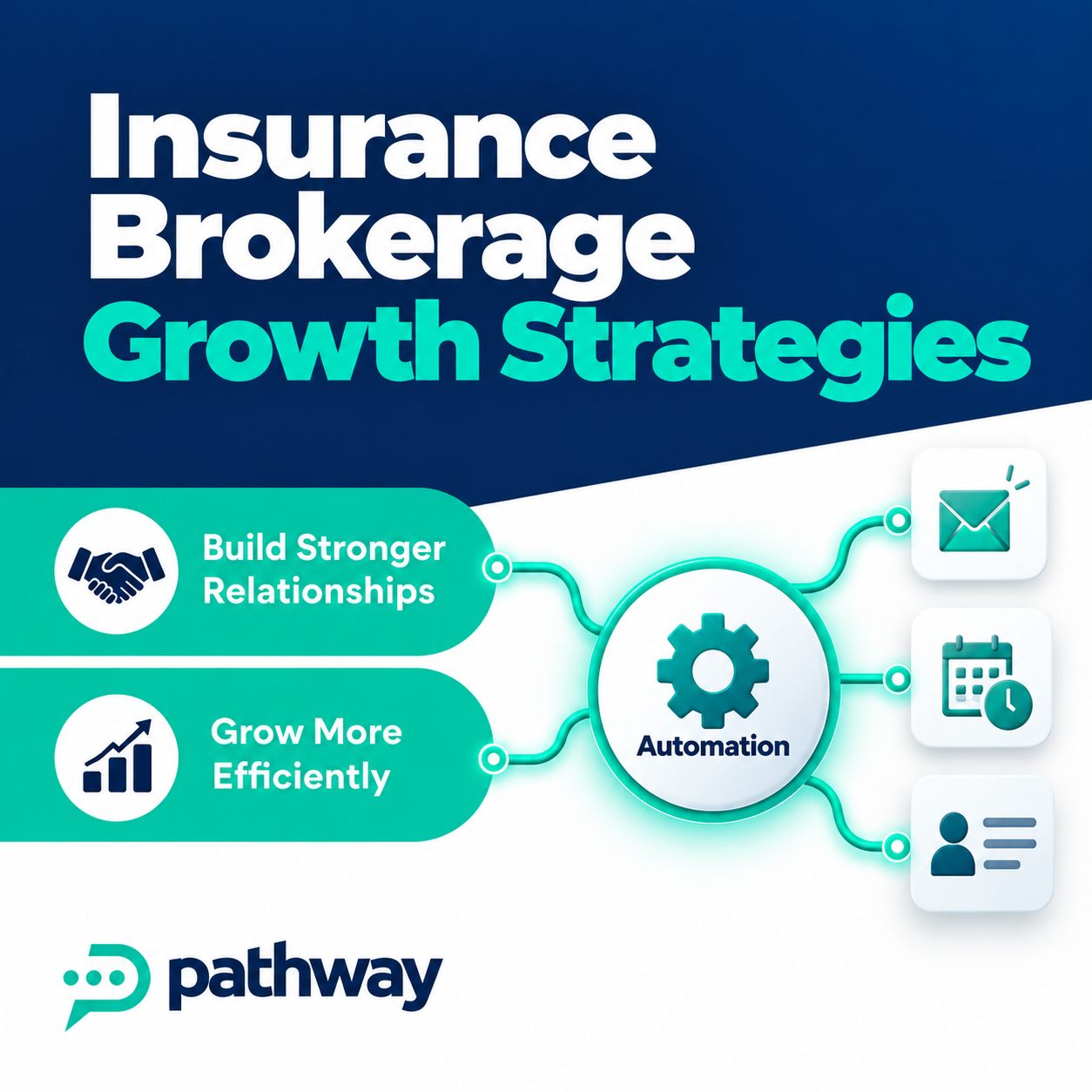
The most effective insurance brokerage growth strategies combine client acquisition, retention, operational efficiency and technology that gives brokers more time to provide advice and build relationships.
Here are seven practical strategies insurance brokerages can use to prepare for 2027.
1. Strengthen Your Brokerage’s Digital Presence
A strong digital presence helps potential clients discover your brokerage, understand your expertise and decide whether to get in touch.
Your website, search visibility, online reviews and social media presence all contribute to how your business is perceived.
For insurance brokers, the goal isn’t simply to attract website visitors. It’s to reach people looking for relevant insurance advice and services.
How to improve your digital presence
Optimise your website for relevant searches.
Create clear pages explaining the insurance products, industries and customer groups you serve.
For example, a brokerage specialising in commercial insurance could publish practical guidance on business interruption, cyber risks or professional indemnity insurance.
Build trust through reviews and testimonials.
Customer feedback helps prospective clients understand the experience of working with your brokerage. Encourage genuine reviews and respond professionally to feedback.
Share useful industry knowledge.
Publish articles, FAQs and LinkedIn posts that answer common insurance questions. Content that demonstrates real expertise can help potential clients discover your brokerage during their research.
Make it easy to contact your team.
Clear contact information, straightforward enquiry forms and accessible booking options can reduce friction for potential customers.
Why this supports growth
A strong digital presence can help your brokerage attract relevant enquiries, demonstrate credibility and compete on expertise rather than price alone.
Practical tip: Review your five most important service pages. Can a prospective client immediately understand who you help, what you offer and how to contact you?
2. Define What Makes Your Brokerage Different
Insurance customers often have several options when choosing a broker. If your brokerage communicates the same generic promises as everyone else, it becomes harder to explain why a client should choose your services.
A clear competitive advantage gives prospects a reason to remember and trust your business.
How to identify your competitive advantage
Start by reviewing what your brokerage does particularly well.
This might include:
- Specialist knowledge of particular industries or insurance products.
- Experience handling complex risks.
- Strong local market understanding.
- Personalised advice and customer service.
- Access to relevant insurer relationships.
- Efficient communication and digital processes.
For example, instead of describing your brokerage as a provider of commercial insurance, explain the specific types of businesses you help and the challenges you understand.
A brokerage supporting construction businesses might demonstrate expertise in contractor liability, project-specific risks and changing coverage requirements.
Turn expertise into marketing content
Once you’ve identified your strengths, make them visible across your website, social media, sales materials and client communications.
Use real examples, customer testimonials where permitted, and practical explanations of the problems you solve.
Practical tip: Ask your team why existing clients choose your brokerage and why they stay. Look for recurring themes that can shape your messaging.
3. Build Stronger Referral and Industry Relationships
Referrals and professional relationships can be valuable sources of new business for insurance brokers. Recommendations often come from people who already understand the needs of a potential client.
For example, a commercial insurance broker may benefit from building relationships with accountants, business advisers, property professionals or industry associations.
How to develop a stronger referral network
Build relationships with complementary professionals.
Identify organisations serving similar customer groups without directly competing with your brokerage.
Stay active in your industry.
Attend relevant insurance events, local business meetings and professional networking opportunities.
Make referrals easy.
Explain which clients you can help, what information is useful when making an introduction and how enquiries will be handled.
Maintain relationships after the first introduction.
Stay in touch with referral partners and provide useful updates rather than contacting them only when you need new business.
Why insurer relationships matter
Growth also depends on maintaining productive relationships with insurers.
In Aviva’s 2026 Broker Barometer, 52% of surveyed brokers identified improving insurer relationships as a priority, while 46% prioritised investment in digital technology and AI.
Strong professional relationships can support access to expertise, smoother communication and better service for clients.
Practical tip: Identify five potential referral partners and create a plan for building ongoing relationships based on mutual value.
4. Improve Lead Follow-Ups and Client Onboarding
Attracting enquiries is only the first step towards insurance brokerage growth. What happens after a prospect requests a quote can influence whether they become a client.
Delayed responses, unclear next steps and inconsistent follow-ups can create unnecessary friction.
Create a structured quote follow-up process
A clear process helps your team maintain contact with prospects while allowing brokers to focus on advice and individual questions.
For example:
- A prospect requests a quotation.
- The brokerage prepares and sends the quote.
- A follow-up message is scheduled if appropriate.
- The broker responds to questions or coverage concerns.
- The outcome is recorded for future reference.
Routine reminders can be automated, while individual insurance advice remains with the broker.
For more examples, read 10 Best Triggered Email Marketing Campaigns for Insurance Brokers.
Make onboarding easier for new clients
Once a prospect becomes a policyholder, the onboarding experience should make it easy to understand what happens next.
A structured process may include:
- A welcome message explaining key contacts and next steps.
- Clear information about policy documents.
- Guidance on payment arrangements.
- Instructions for requesting assistance.
- Relevant contact details and service information.
Digital communication and document delivery can help make these steps more consistent.
Why this supports growth
A reliable follow-up and onboarding process can improve the customer experience and reduce the risk of enquiries being overlooked.
Practical tip: Review how many manual steps your team completes between sending a quote and onboarding a new policyholder.
5. Focus on Client Retention, Not Just Acquisition
Winning new clients is important, but maintaining existing relationships is also a major part of sustainable insurance brokerage growth.
Clients who feel informed and supported are better positioned to make confident decisions about their insurance needs. Retention is especially relevant as customers approach renewal.
Start renewal communication earlier
Waiting until the renewal date is close can leave limited time to review changes, answer questions and discuss coverage needs.
A structured renewal process can help brokers identify clients who need attention and maintain communication throughout the renewal period.
For a closer look at renewal engagement, read What Insurance Brokers Miss Before Renewal.
Communicate throughout the policy lifecycle
Client relationships shouldn’t depend entirely on renewal dates.
Useful communication may include:
- Relevant risk prevention advice.
- Updates about changing insurance needs.
- Policy-related notifications.
- Educational newsletters.
- Claims-related follow-ups.
- Customer feedback requests.
The purpose is to provide value rather than simply increase the number of emails sent.
Understand why clients leave
When a policy is cancelled, the brokerage should understand whether the client has genuinely left, why the cancellation occurred and whether further communication is appropriate.
Feedback can reveal opportunities to improve service and identify suitable ways to reconnect.
For more guidance, read Policy Cancellation: Does It Mean You’ve Lost a Client?.
Why this supports growth
Retention strategies help brokerages protect existing relationships, identify changing customer needs and reduce avoidable communication gaps.
Practical tip: Review your client communication process across the full policy lifecycle, not just the weeks immediately before renewal.
6. Reduce Manual Work Through Insurance Brokerage Automation
As an insurance brokerage grows, administrative work often grows alongside it. More policies mean more renewal reminders, payment notifications, quote follow-ups and customer updates.
When these activities rely heavily on manual processes, staff may have less time for client conversations and business development. This makes automation an important part of insurance brokerage growth strategies.
Which insurance workflows can be automated?
Common opportunities include:
| Workflow | How automation can help |
| Renewal reminders | Schedule relevant communication before policy renewal |
| Quote follow-ups | Maintain contact about outstanding quotations |
| Billing reminders | Send timely payment-related notifications |
| Policy document delivery | Support consistent digital communication |
| Marketing campaigns | Schedule newsletters and customer updates |
| Client feedback requests | Collect feedback after relevant events |
| Client recovery | Support appropriate follow-up with former clients |
The best starting point is usually a repetitive workflow that follows clear rules and requires limited manual preparation.
Automation should support insurance brokerage growth, not replace it
Insurance clients still need professional judgement, advice and personal attention.
Automation is most valuable when it handles predictable administrative tasks and allows brokers to focus on more complex customer needs.
For UK-specific renewal workflows, read How Do UK Insurance Brokers Automate Renewals?.
Why technology matters for 2027
The British Insurance Brokers’ Association highlighted operational efficiency as an important industry priority in its 2026 manifesto, alongside the need to reduce unnecessary regulatory friction.
For growing brokerages, improving processes can help teams manage increasing workloads without allowing administration to dominate their working day.
Practical tip: Ask staff which three repetitive tasks take the most time each week. Evaluate whether these activities could be standardised or automated.
7. Measure Insurance Brokerage Growth and Invest in the Right Technology
Insurance brokerage growth isn’t only about increasing revenue. Brokerages should also understand whether they’re retaining clients, converting opportunities and managing their workload efficiently.
Without clear measurements, it can be difficult to identify which growth strategies are delivering value.
Which metrics should insurance brokerages track?
| Metric | What it helps you understand |
| New client enquiries | Whether acquisition activities generate interest |
| Quote conversion rate | How effectively quotations turn into business |
| Client retention rate | How many clients remain with the brokerage |
| Renewal retention rate | How effectively existing business is retained |
| Revenue per client | The value of customer relationships |
| Referral enquiries | The contribution of professional networks |
| Administrative time per workflow | Where operational improvements are possible |
| Campaign engagement | How clients interact with communications |
Review these metrics regularly and compare them against your brokerage’s own historical performance.
Choose technology based on business needs
Before investing in new insurance brokerage software, ask:
- Which problem are we trying to solve?
- Does the solution work with our existing systems?
- Will it reduce manual work or create another administrative task?
- Can our team manage it easily?
- Does it support the communication our clients need?
- How will we measure its value?
For brokerages using systems such as Acturis, compatibility and the availability of relevant integrations should be checked before implementation.
Technology should support the brokerage’s existing operations and growth priorities rather than dictate them.
Don’t overlook people and skills
Technology alone doesn’t create sustainable growth.
In a survey of 92 brokers conducted at the 2026 BIBA Conference, 40% identified attracting and retaining talent as their biggest concern, compared with 24% who selected AI and automation.
This reinforces the importance of combining technology investment with staff development, clear responsibilities and customer service expertise.
Practical tip: Create a quarterly growth scorecard covering acquisition, retention, operational efficiency and team capacity.
Insurance Brokerage Growth Strategy Checklist for 2027
Before introducing new tools or campaigns, review your brokerage’s current approach.
| Growth area | Question to ask | Next action |
| Digital presence | Can prospective clients easily find and understand our services? | Review website content and search visibility |
| Competitive advantage | Is our expertise clearly differentiated? | Refine positioning and service messaging |
| Referrals | Do we have an active professional network? | Identify and develop referral relationships |
| Lead conversion | Are quotes followed up consistently? | Review the quote follow-up process |
| Client retention | Do we communicate throughout the policy lifecycle? | Map key customer touchpoints |
| Operational efficiency | Which repetitive tasks take the most time? | Prioritise automation opportunities |
| Performance | Do we measure the right business outcomes? | Establish a quarterly growth scorecard |
You don’t need to address every area simultaneously. Start with the challenges that have the greatest effect on your clients, staff and business performance.
How PathwayPort Can Help Insurance Brokerages Grow
Sustainable growth requires efficient processes and strong client relationships.
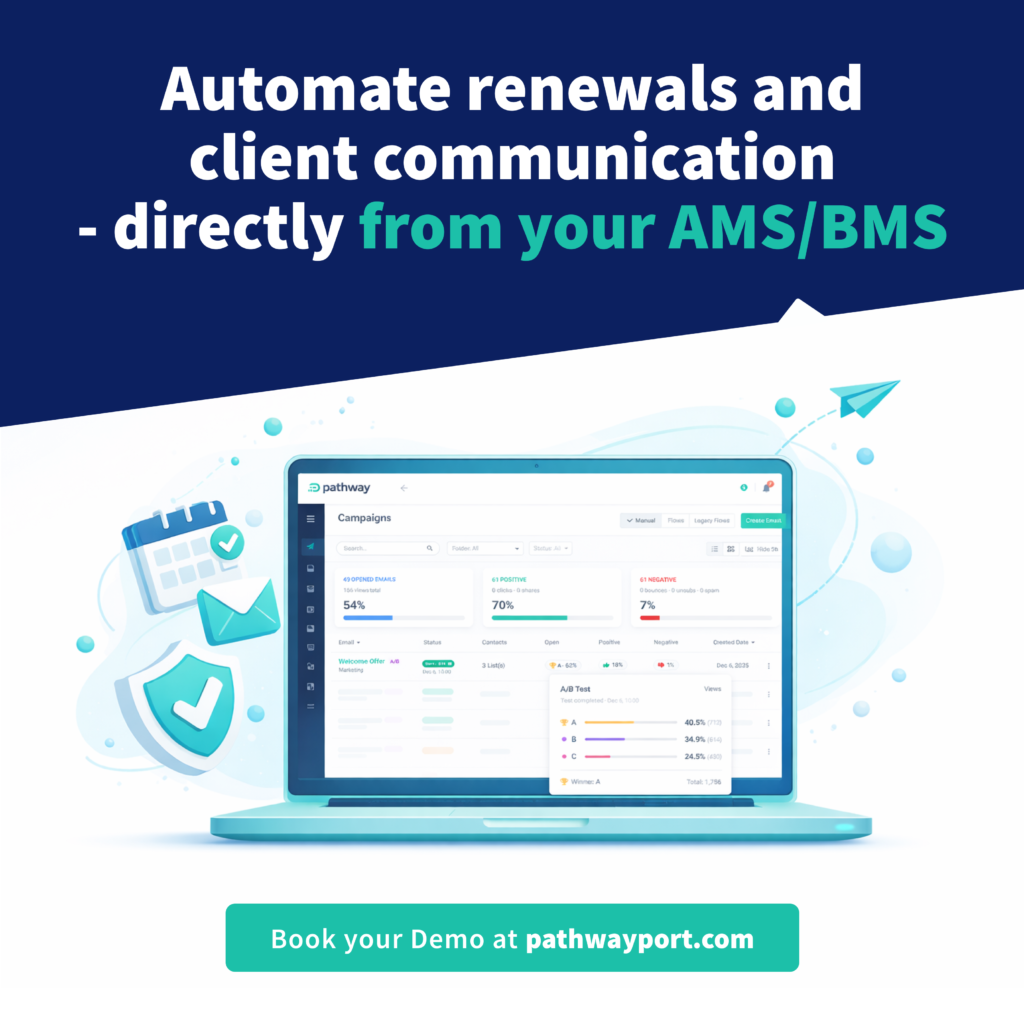
PathwayPort helps insurance agencies and brokerages automate routine communication, including renewal reminders, quote follow-ups, billing notifications and marketing campaigns.
By reducing repetitive administrative tasks and keeping clients informed, PathwayPort helps your team create more time for customer service, advice and business development.
Book a Demo to see how PathwayPort can support your brokerage’s growth.
Frequently Asked Questions About Insurance Brokerage Growth
What are the best insurance brokerage growth strategies for 2027?
Seven important strategies are improving digital visibility, defining a competitive advantage, building referral relationships, strengthening lead follow-ups, improving client retention, automating repetitive tasks and measuring business performance.
The most suitable combination depends on the brokerage’s size, customer base and growth objectives.
How can insurance brokers grow their business?
Insurance brokers can grow by attracting relevant enquiries, converting more opportunities, retaining existing clients, developing referral relationships and improving operational efficiency.
Growth is more sustainable when customer service and business processes improve alongside revenue.
How can insurance brokers attract more clients?
A strong website, useful educational content, online reviews, professional networking and consistent lead follow-ups can help attract new clients. Brokerages should focus on reaching customers whose insurance needs match their expertise.
Why is client retention important for insurance brokerage growth?
Client retention helps protect existing relationships and reduces the need to replace lost business continually. Proactive communication, reliable service and timely renewal engagement can support retention.
How does automation help insurance brokerages grow?
Insurance brokerage automation can reduce repetitive administrative tasks such as renewal reminders, billing notifications and quote follow-ups. This can free up staff capacity for client conversations, advice and business development.
What technology should an insurance brokerage invest in?
The right technology depends on the brokerage’s needs. Common priorities include brokerage management systems, communication automation, customer data management, document delivery and reporting tools. Integration, security, ease of use and implementation costs should all be considered.
How can small insurance brokerages compete with larger firms?
Smaller brokerages can differentiate themselves through specialist expertise, local knowledge, personalised service, strong relationships and efficient communication. They don’t necessarily need the same resources as larger firms to deliver a valuable customer experience.
How should insurance brokerages measure growth?
Useful measures include new enquiries, quote conversion, client retention, renewal retention, revenue per client, referrals and administrative efficiency. Tracking these indicators over time helps identify which strategies are working.
Final Thoughts
Insurance brokerage growth in 2027 will depend on more than attracting new customers. The brokerages best positioned to grow will be those that combine clear market positioning, strong client relationships and efficient everyday processes.
By focusing on these seven insurance brokerage growth strategies, brokers can create a more sustainable approach to acquiring clients, improving retention and making better use of their team’s time.

Recent Posts
 How to Identify Insu…October 20, 2026
 Policy Cancellation:…October 13, 2026
 Email Marketing Insi…August 28, 2026
Collapsible


Leave a Comment
Comments:
It¦s in point of fact a great and helpful piece of info. I¦m satisfied that you just shared this helpful info with us. Please keep us informed like this. Thank you for sharing.
Comment by Latesha Hillary on May 1, 2022 at 17:12I like this blog so much, saved to favorites.
Comment by gralion torile on May 6, 2022 at 19:20Good write-up, I’m regular visitor of one’s blog, maintain up the nice operate, and It is going to be a regular visitor for a lengthy time.
Comment by zoritoler imol on May 9, 2022 at 22:51Everything is very open and very clear explanation of issues. was truly information. Your website is very useful. Thanks for sharing.
Comment by Mao Dominicus on May 17, 2022 at 05:53